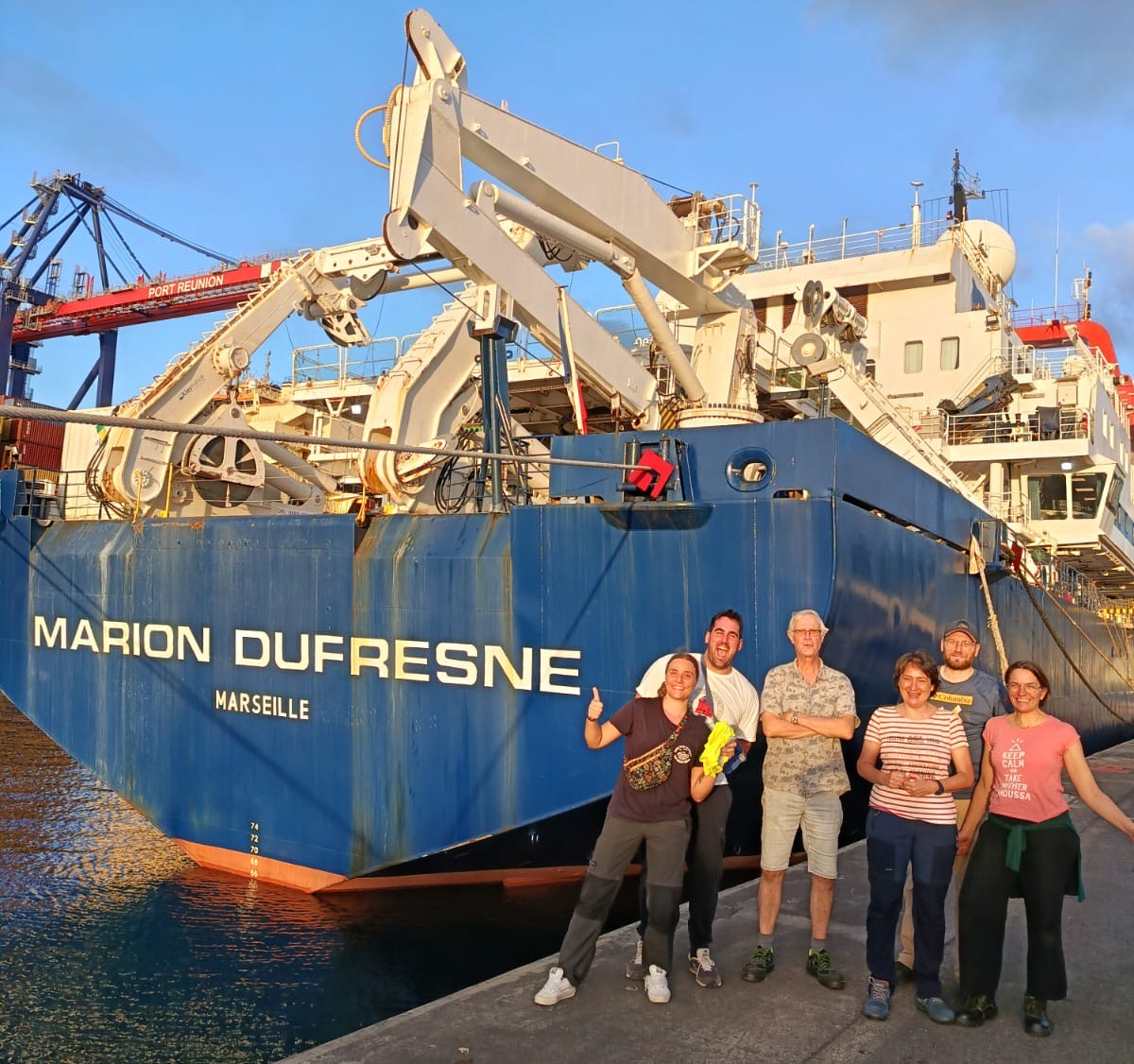
The VACOA research team ready for the start of the campaign on 14 January 2026, along with the MAP-IO OSU-Réunion support team.
—
Study of volatile organic compounds (VOCs) and aerosol chemistry at the ocean-atmosphere interface in the Indian and Southern Oceans (LEFE VACOA project and OBSAUSTRAL 2026 oceanographic campaign)
—
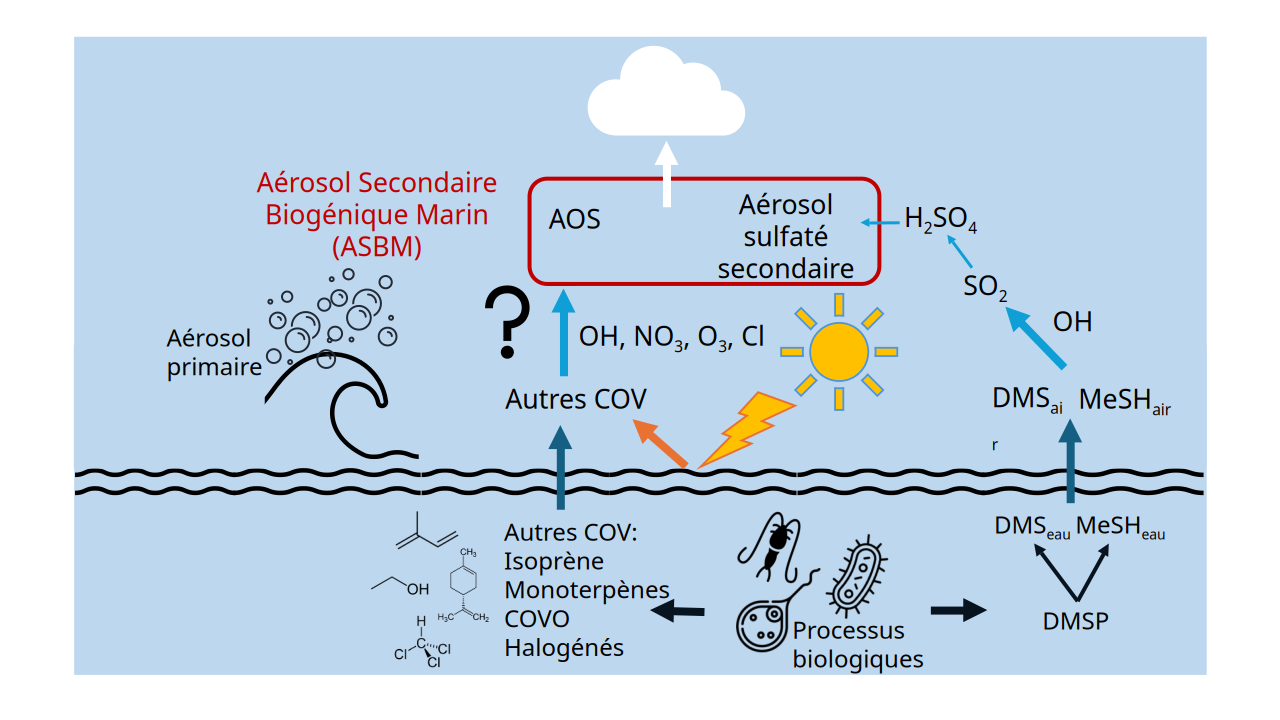
Volatile Organic Compounds (VOCs) play a crucial role in the atmosphere by reacting with oxidants, influencing the atmosphere oxidising capacity and contributing to the formation of secondary compounds, such as tropospheric ozone. VOCs are also precursors to Secondary Organic Aerosols (SOAs), which impact the climate through their direct and indirect effects. Although studies on VOCs often focus on continental areas, oceans are a significant source of these compounds. Among these marine VOCs, dimethyl sulphide (DMS) and methanethiol (MeSH) are important for the formation of marine secondary biological aerosols (MSBA). However, understanding of the processes involved in these mechanisms, especially in the Indian and Southern Oceans, remains limited. These regions are critical for the study of ocean-atmosphere interactions, highlighting the need for further research on VOCs and their climate impacts. The VACOA (VOC and Aerosol Chemistry at the Ocean-Atmosphere interface in the Indian and Southern Oceans) project, funded by the LEFE program of INSU (CNRS), aims to:
• Characterise VOC concentrations and their sources in tropical, subtropical and sub-austral oceanic environments through measurements taken aboard the Marion Dufresne II oceanographic research vessel ;
• Physically and chemically characterise the particulate phase (size, number, chemical composition) to understand its composition and its origin.
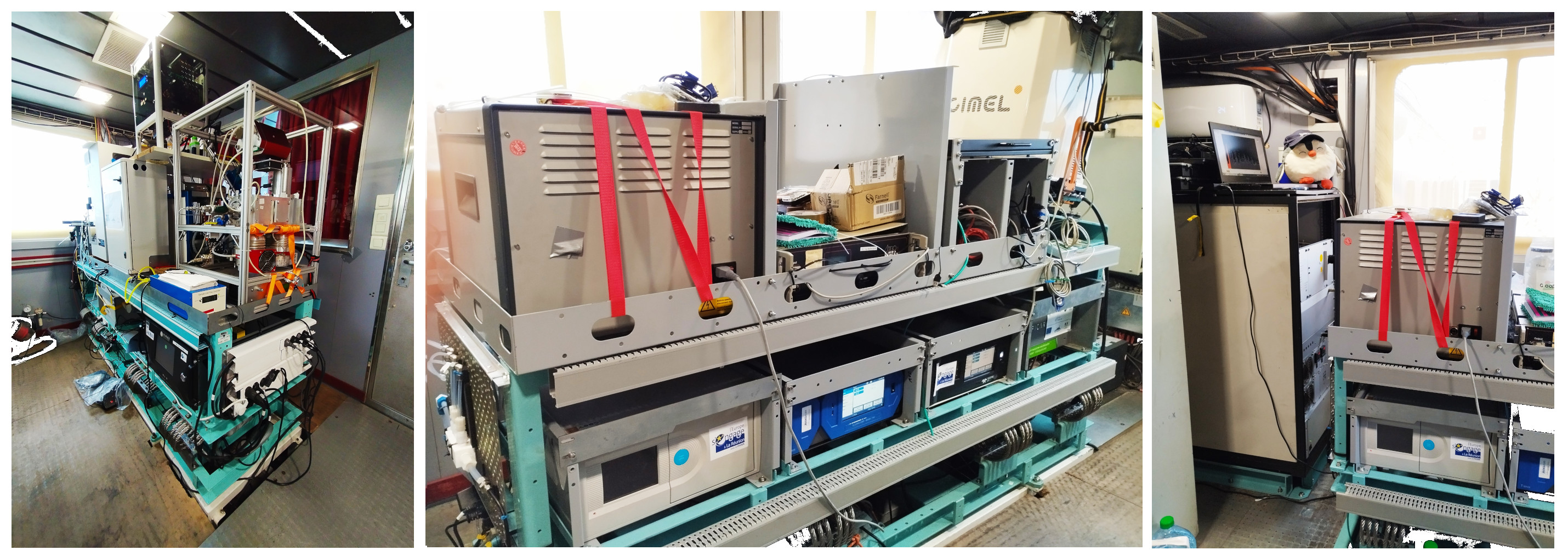
Ultimately, these measurements will be used to develop a model to identify the sources and processes of marine organic aerosols using a source-receptor model. Ultimately, all data will be used to initiate modelling work on atmospheric chemistry at the ocean-atmosphere interface. The VACOA project is being implemented through an oceanographic research campaign, from 14th January to 27th of February 2026, aboard the oceanographic vessel Marion-Dufresne, in the framework of OBSAUSTRAL program, which aims to improve our understanding of how the Southern Ocean works. The VACOA project equipment complements and builds on the instrumentation already present and numerous data collected on the vessel as part of the MAP-IO (Marion Dufresne Atmospheric Program – Indian Ocean) CNRS-INSU National Instrument (www.mapio.re).
PI project : Julien KAMMER (LCE, Marseille), Manon ROCCO (LCE, MIO, Marseille), Olivier MAGAND (OSU-Réunion)
Local contact: Olivier Magand
External contact: Manon Rocco (LCE, MIO, Marseille, France) et Julien Kammer (LCE, Marseile)
VACOA project participating laboratories: LCE, OSU-Réunion, LSCE, LaMP, LACy, LAERO, ENTROPIE, MIO
VACOA research team during the OBSAUSTRAL oceanographic expedition : Manon ROCCO (LCE, MIO), Valérie GROS (LSCE), Antonin BERGE (LSCE), Aurélie COLOMB (LaMP)